

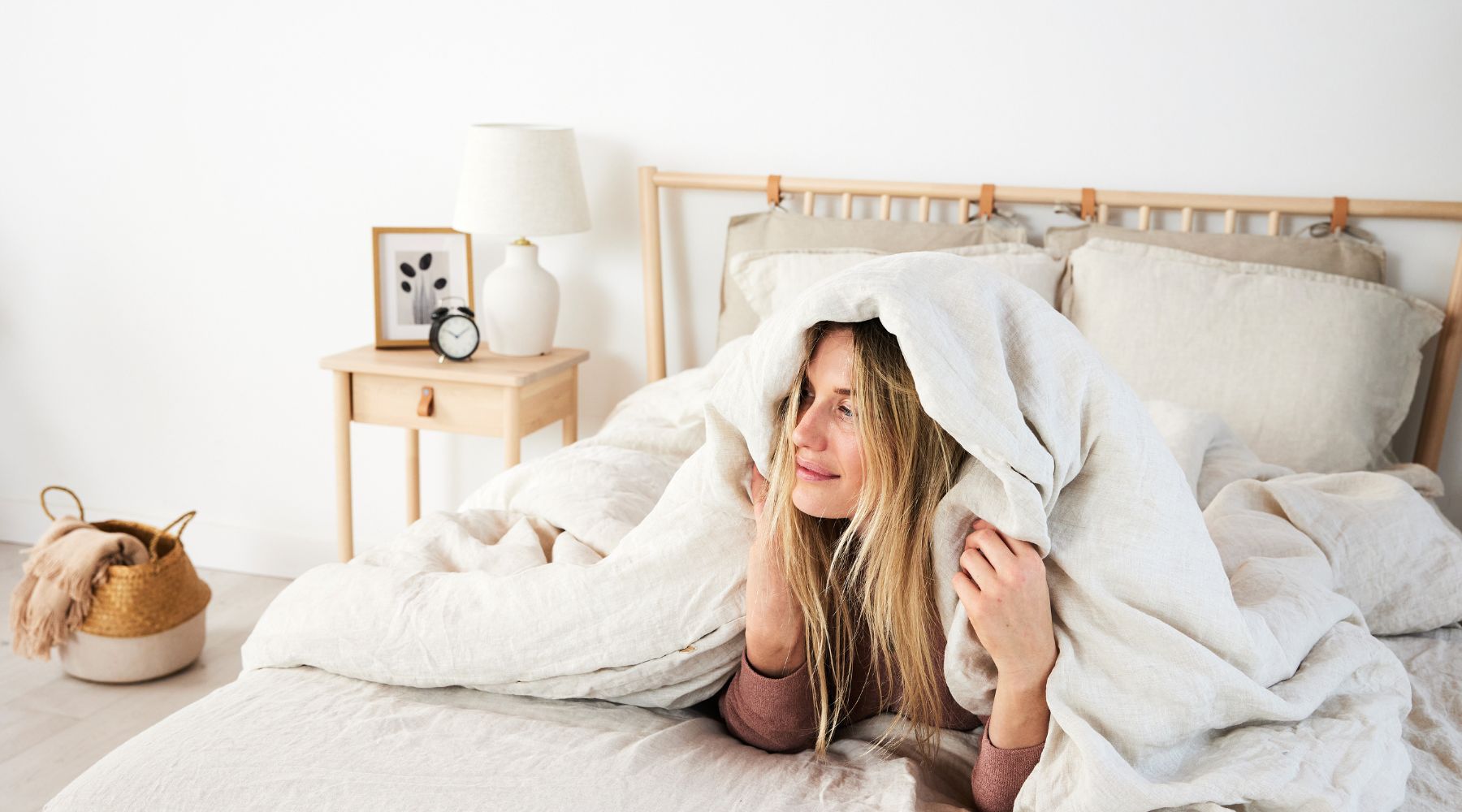
Linen for Every Personality: Finding Your Perfect Bed Vibe
Learn how to style your bed to match your personality. Whether you’re minimalist, boho-chic, modern, or somewhere in between, we’ll show how to use colors, textures, and layering to express yourself.
How the Different "Design Styles" Came About
Design styles are not like star signs, personality types, or color seasons—they're the result of centuries of cultural development and the work of countless designers, who each built upon what came before. By understanding the origins and characteristics of each style and why it speaks to you (or doesn't), you'll get much closer to your true needs than by copying something you saw on Pinterest.
That being said, if you're truly new to all this, you can better understand your design style through the wonders of Internet quizzes. Our favorites are from Cristina Cleveland and Bobby Berk.
Bear in mind, however, that your ideal style won’t exactly fit one these categories, just as there is no quintessentially "Scandi" or "boho" designer. For more on mixing different design styles, check out our dedicated blog.

Minimalism
Minimalism is the combination of several schools of thought from different countries, including the German Bauhaus art school (1919-1933), the Netherlands' De Stijl movement, and the Japanese concept of "ma," or negative space. For minimalist designers, everything must have a purpose and empty spaces are as much a part of the design as the objects themselves.
A common misconception about minimalism is that it is "cheap"—but this is one of the most expensive design styles when its original principles are applied. Consider the UNESCO-listed Villa Tugendhat in Brno, Czech Republic. German designer Mies Van Der Rohe pared the design back to the essentials, but those essentials used the finest, most beautiful materials: rosewood, onyx, and ruby-red velvet.
Another myth about minimalism is that it's all white, gray, and black. Color is in fact used, but it's limited to the occasional accent.
Minimalism suits personalities who care about the finer things in life; people who would rather buy one excellent wine to savor than knock back several bottles from the bottom shelf. A minimalist bed frame, therefore, would not only be essentialist in form (clean lines, no headboard), but would use the finest craftsmanship and materials. Only real, unknotted wood or fine leather will do—no veneer or MDF.
For bedding, stick with white, off-white, or gray from our solid-color European bedding range. This will show off the linen texture beautifully—save your color accents for smaller objects like art or lamps. Don't bother with throws or accent pillows.

Mid-Century Modern
"Modernism" (not to be confused with "contemporary," meaning present-day) can refer to several styles, from 1930s "International Style" to minimalism and Functionalism. But in today's parlance, "modern" usually means mid-century modern, a style that has come back into fashion.
Mid-century modern originated in the post-WWII period (1945-c. 1970), mostly in the US and the Nordics (particularly Denmark and Finland). Materials were scarce, pushing designers to economize. But this was not minimalism: bold was beautiful. Designs such as the Eames chair made a big statement with simple, curved silhouettes and little ornamentation. Personality-wise, this look would appeal to those who are larger than life—or who often imagine themselves as a character in Mad Men.
For your bed frame, think low-profile, clean, clear, and curvy, with warm woods such as teak, ash, and walnut (or a dark-stained wood). Legs should be visible, possibly tapered and likely chrome. Don't store anything underneath the bed; negative space is a big part of this look. The headboard should be a simple wood panel, possibly with curved corners.
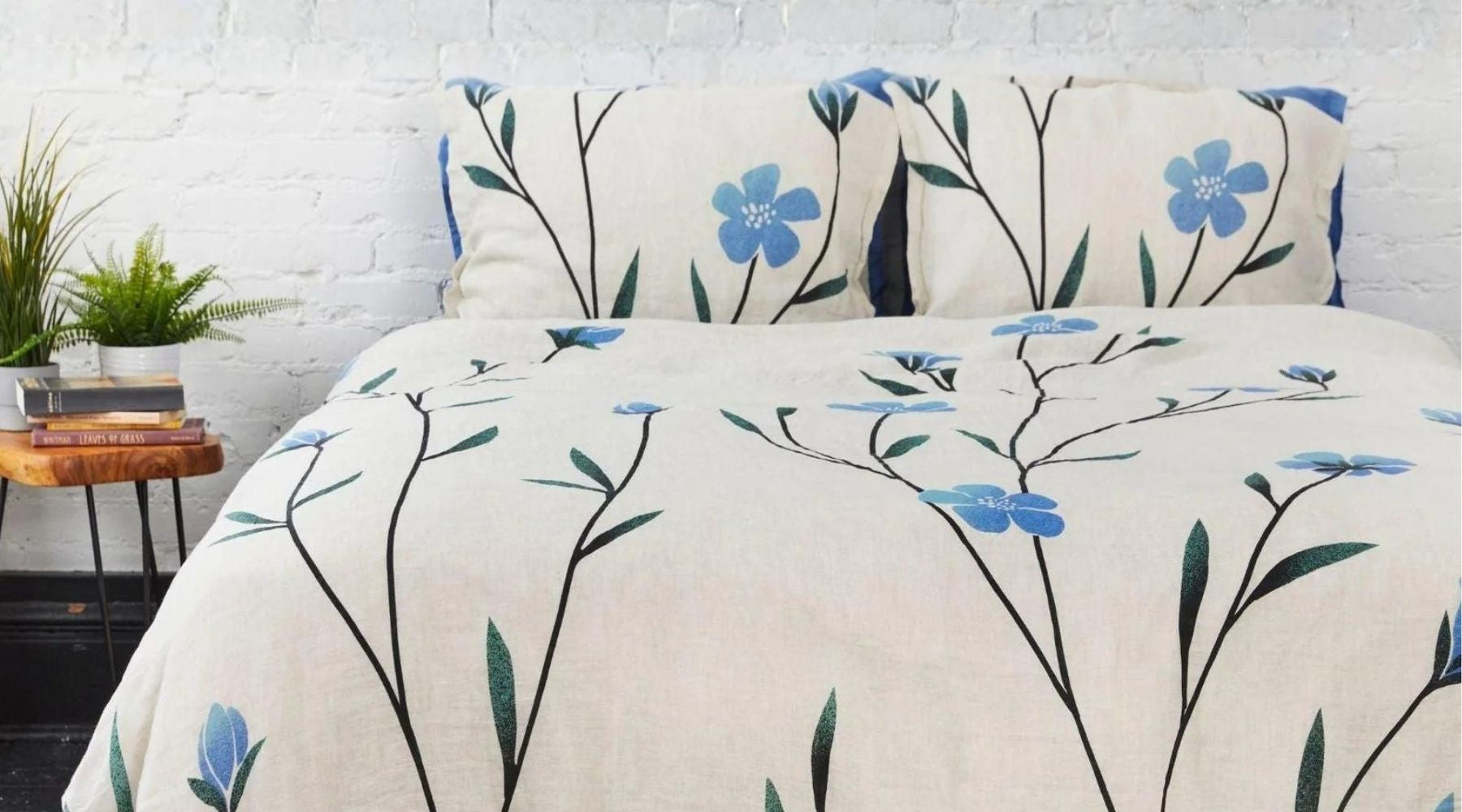
For bedding, think vintage vibes and big graphics. Our green solid-color soft linen bedding gives just the right amount of mid-century warmth. Among our printed European bedding, the thick lines of Porse complement a striking frame.

Bohemian ("Boho")
The "boho" style takes its name from the word "Bohemian," meaning an artist or wanderer who lives an unconventional life. It draws on numerous influences throughout the centuries, from the Beat scene to cafe culture. Modern boho, however, mostly draws on 60s and 70s counterculture, which borrowed from Indian, North African, Middle Eastern, and South American textile traditions. As the name suggests, people who like the Bohemian style are typically "bohemian" themselves—think artists, writers, and musicians.
The boho look has been widely commercialized; shops sell cheap "ethnic" goods made by exploited workers in developing countries. It’s best to return to the roots of the style and shop for vintage and thrifted items (or buy directly from makers, e.g. Etsy) instead. The bed frame should be wood, possibly carved with a design—a vintage Arts and Crafts frame would work well.
You might think that we'd suggest a patterned duvet cover for this look, but because there are so many other things going on—embroidered cushions! knitted throws!—we suggest keeping the bedding simple. Consider blue or green soft linen bedding to finish off the look.

"Ljust och fräscht" (Stereotypical Scandinavian)
We've written at length about how Scandinavian design is much more than white walls and light woods. But this look is popular for a reason—so here, we're going to lean into it.
Within its birthplace of Sweden, this style is colloquially known as "ljust och fräscht", or "light and fresh." It originated in 1930s Functionalism, when sun, light, and air were considered the most important elements of home design.
A version of this exploded in Sweden (and onto Pinterest) in the 2000s and 2010s. It took the principles of "sun, light, and air" to extremes, mandating white walls, blond woods such as ash, and clean lines. It became so overused that it's now satirized in its home country. There's even a comedy show called "Ljust & fräscht", where the two stars—playing interior designers—wear all white, walk barefoot, and enthuse about designing "crumb-free bread" and a home that "looks like a Danish airport terminal."
Regardless of how Swedes feel about it, "ljust och fräscht" is still beautiful and timeless, and would suit those who favor a slow, simple, uncluttered life. People who like this style are likely introverts, who prefer curling up with a book over attending a party.

A typical Scandi bed frame would be light-wood, simple, and functional, with plenty of under-bed storage space (built into the frame to maintain the clean look). Bedding should be white or gray, but it doesn't have to be completely unembellished; think Porse or Blålig from our printed collection of European linen duvet covers. In true Swedish style, couples might have two duvets rather than one.
What’s your favorite design style? Did any of our design facts surprise you? Let us know on Instagram, Pinterest, Facebook or Twitter!
Read more
The Modern Dane’s Guide to Sustainable Living in 2026
Live more sustainably in 2026 with our sustainable living guide—covering energy-saving habits, water conservation, and eco-friendly home essentials.
Read more
Hygge for Two: Creating a Warm Valentine’s Day Atmosphere
Celebrate Valentine’s Day the hygge way with Scandinavian-inspired decor, candlelight, baking, and cozy moments at home.
Read more

Leave a comment
This site is protected by hCaptcha and the hCaptcha Privacy Policy and Terms of Service apply.