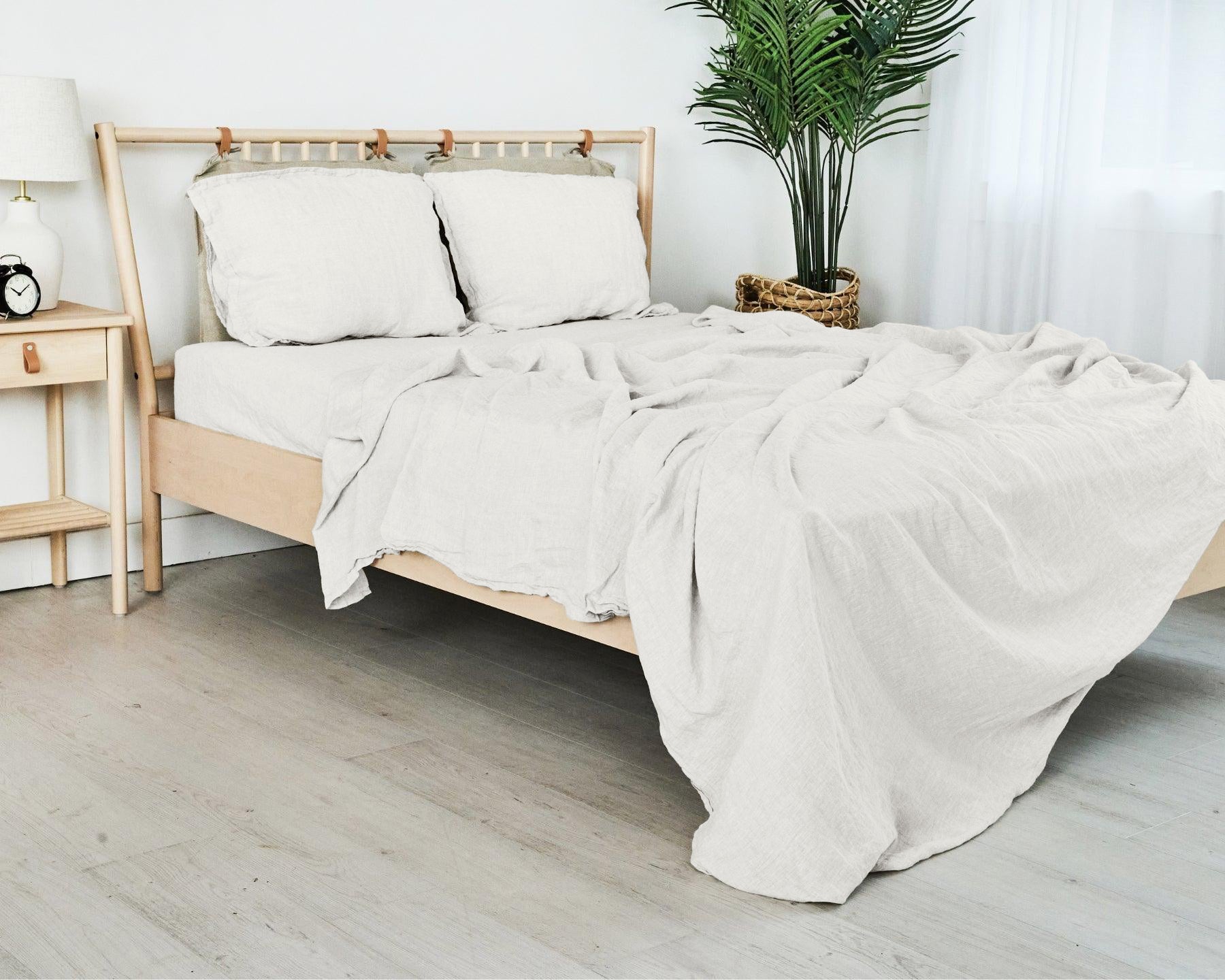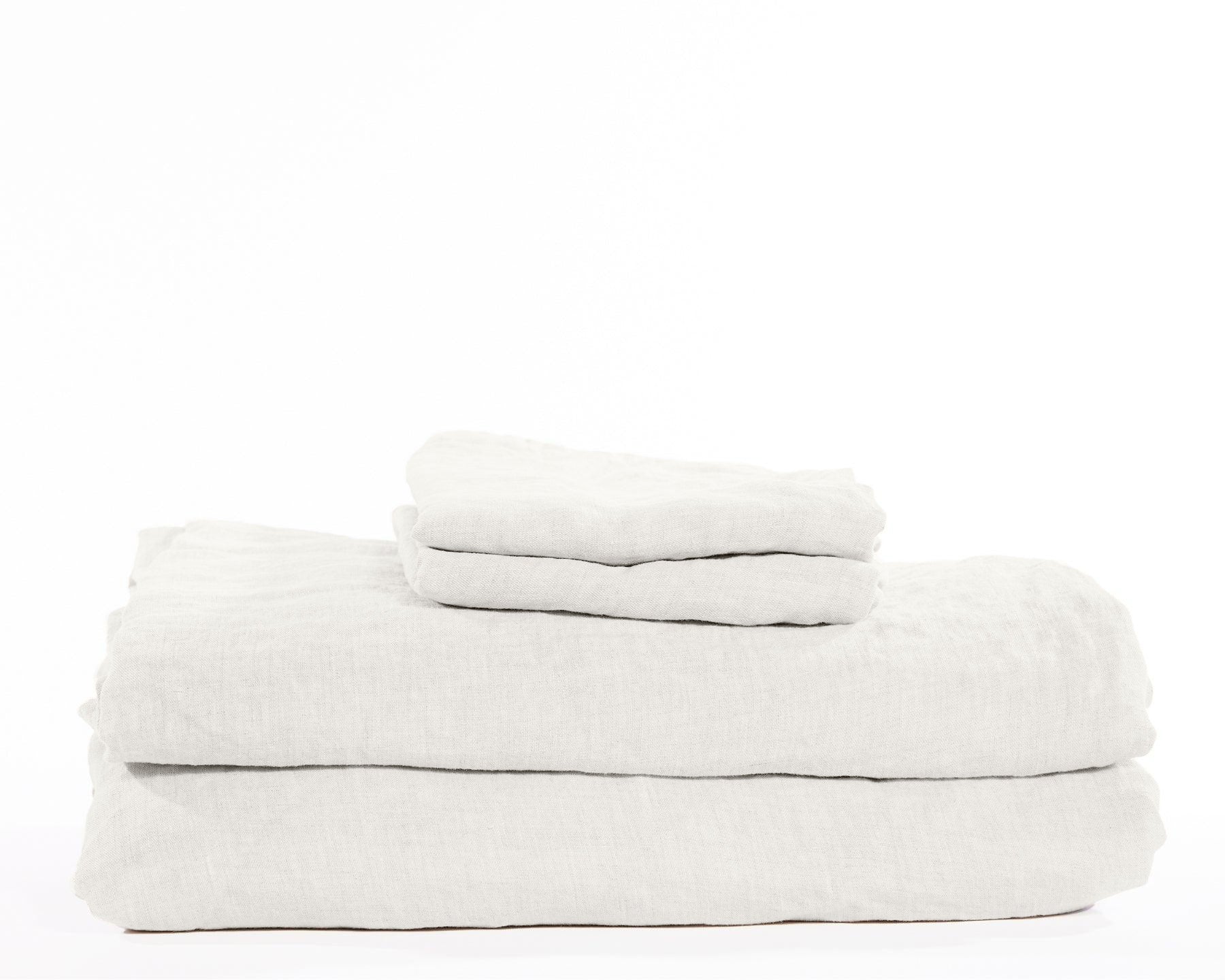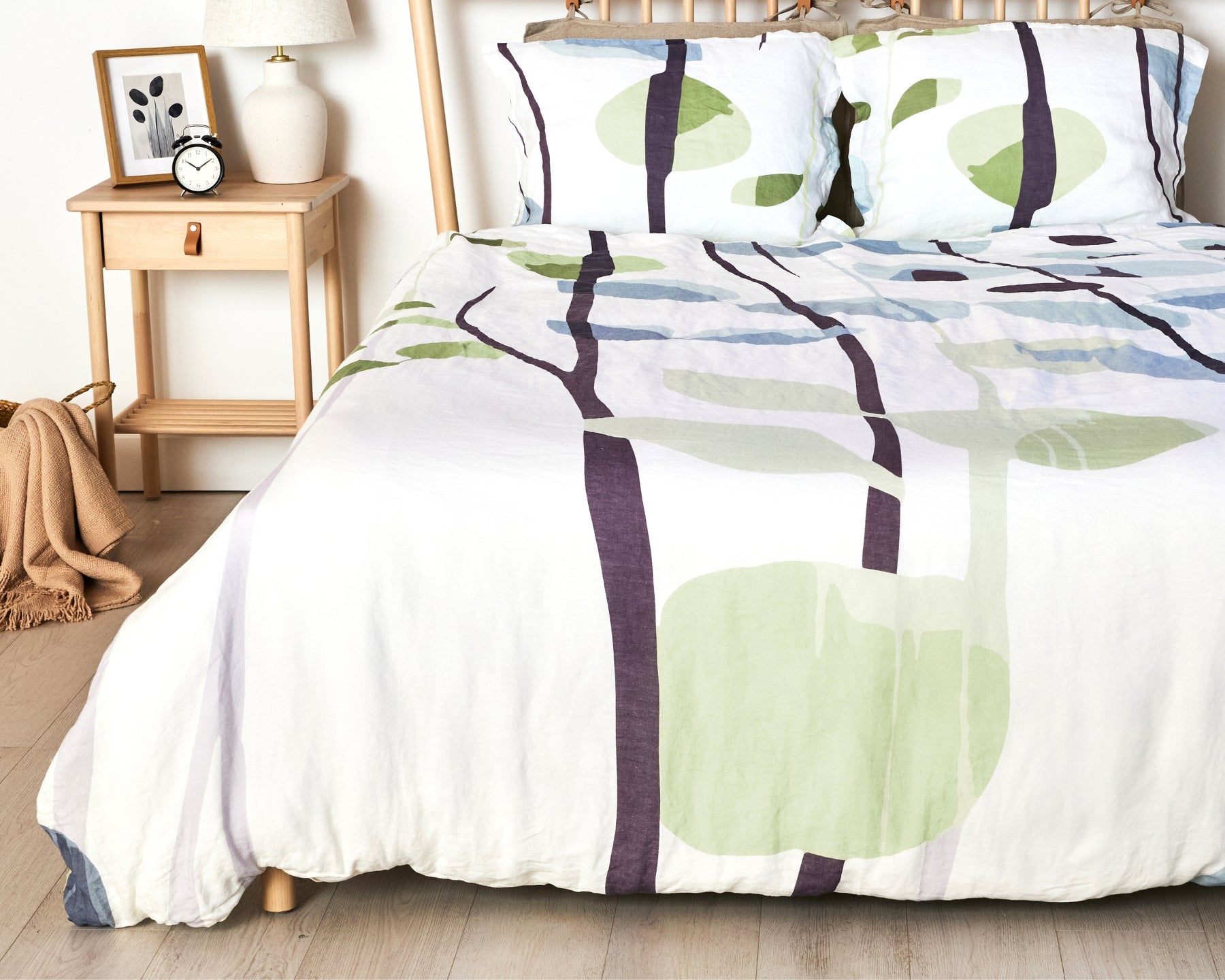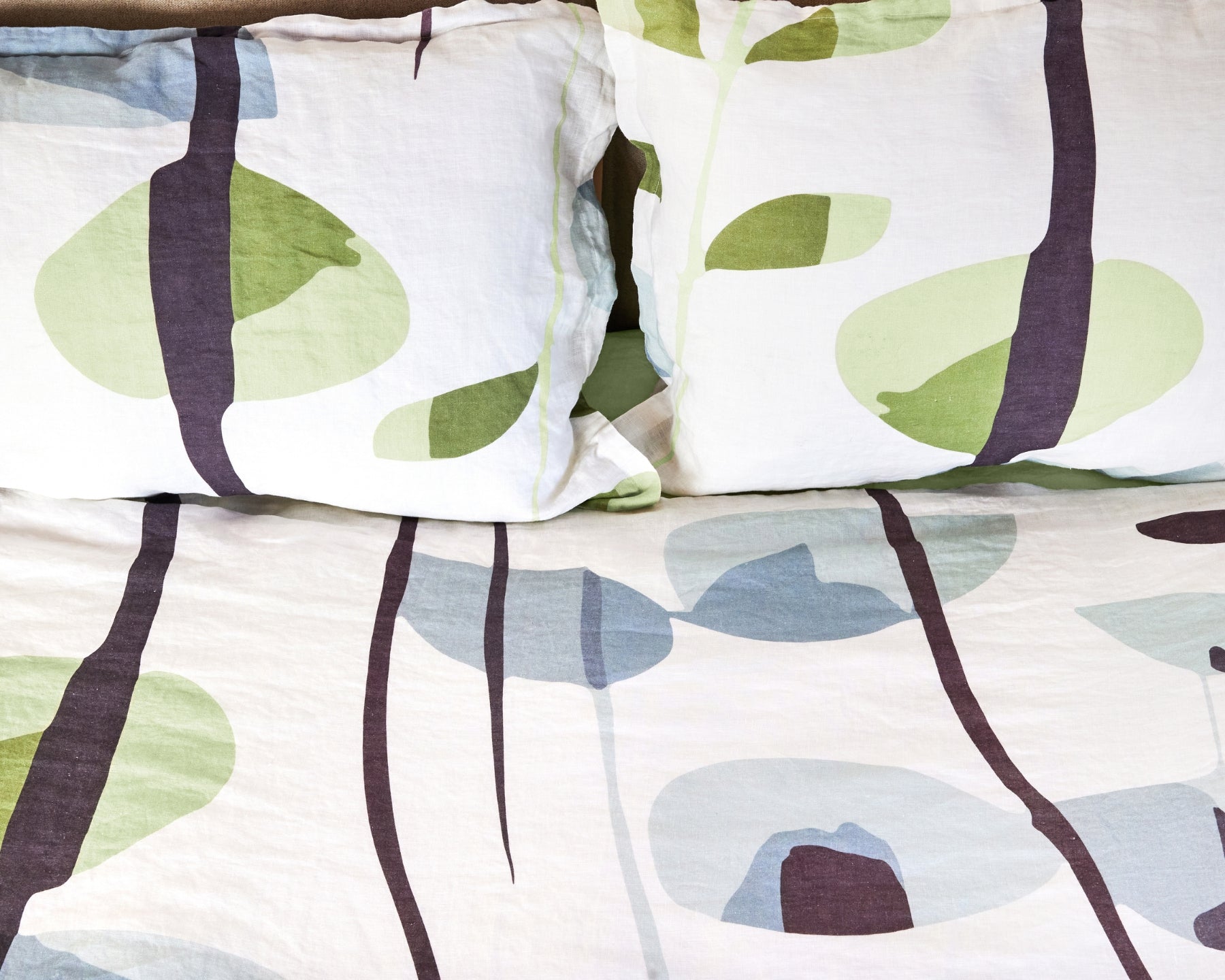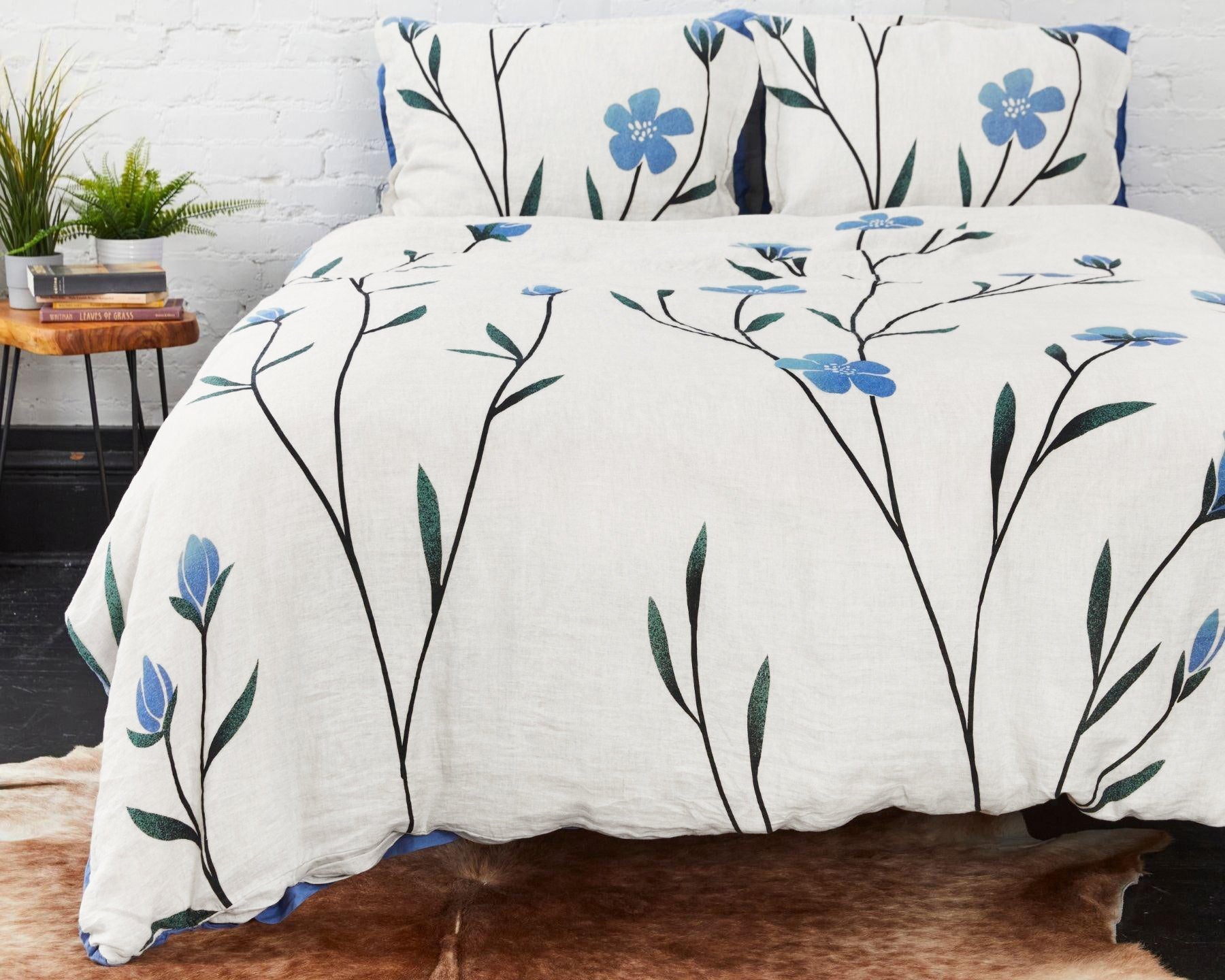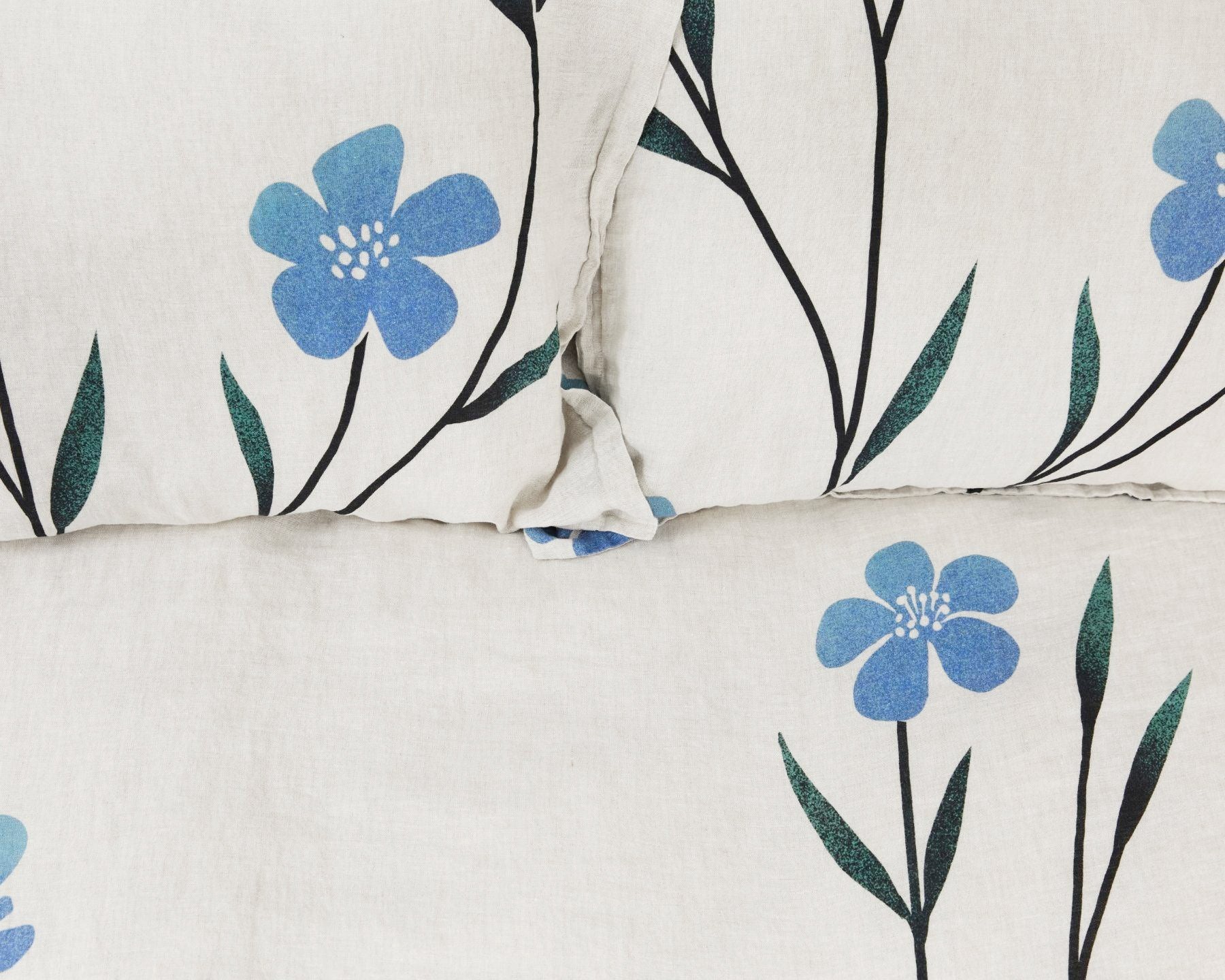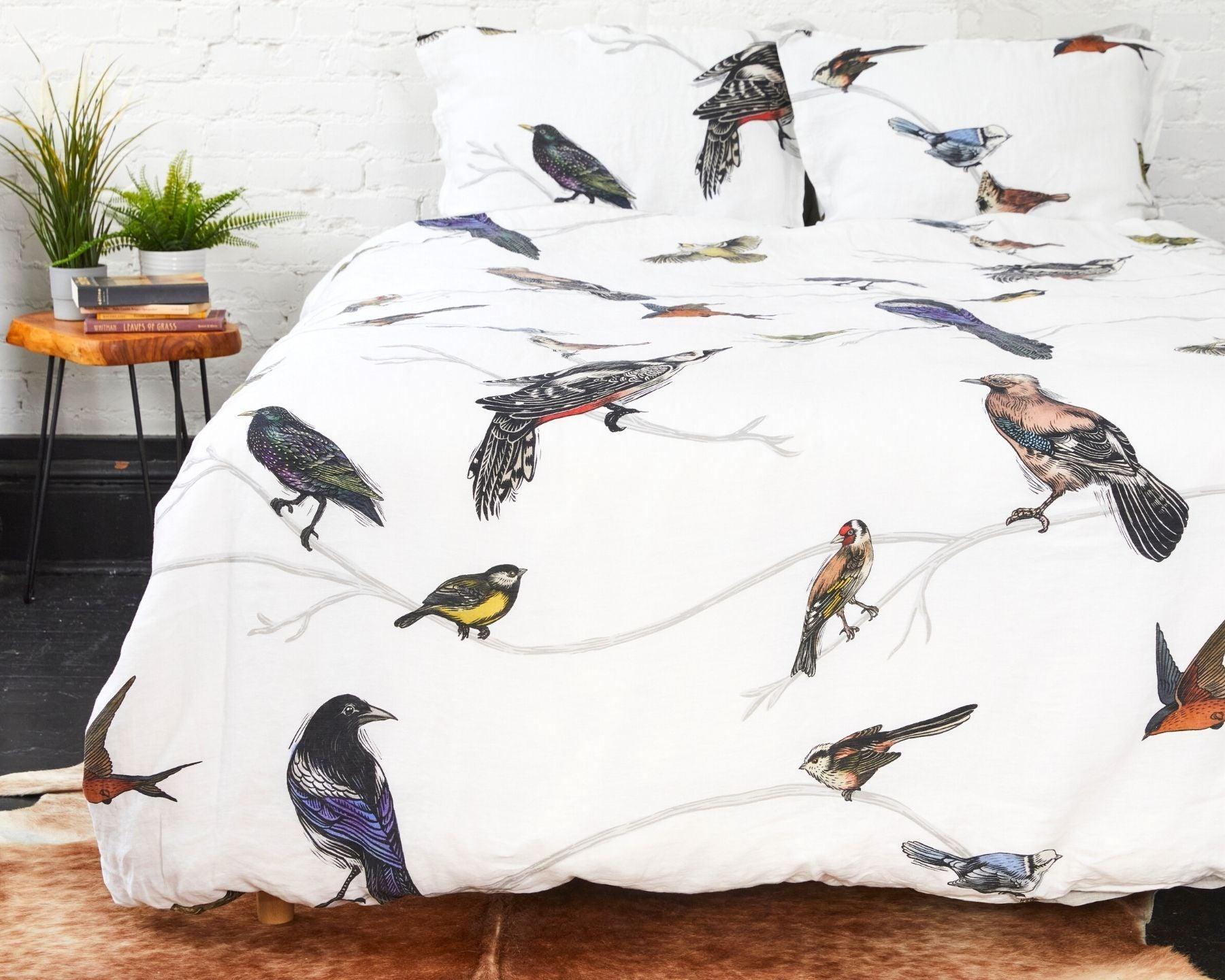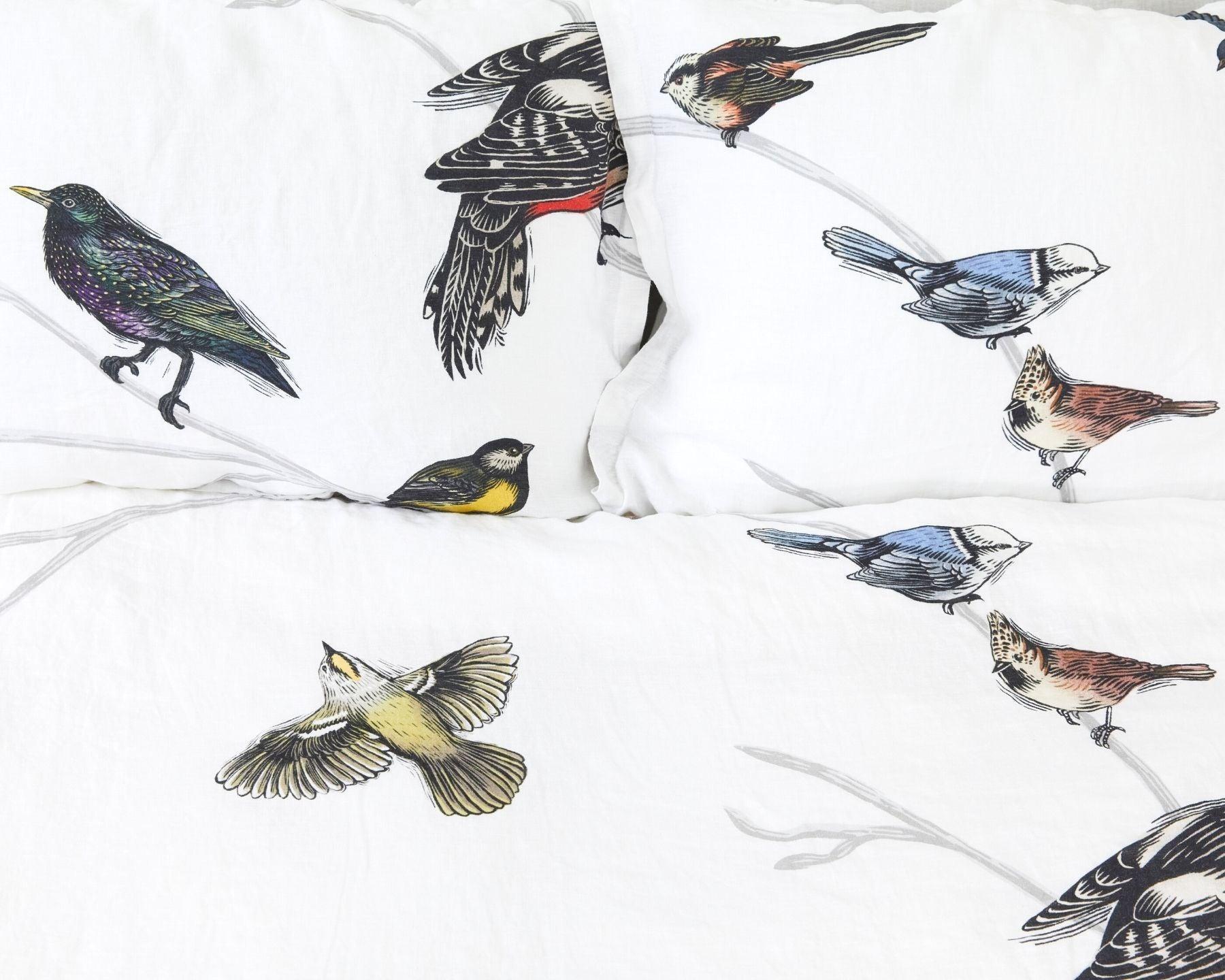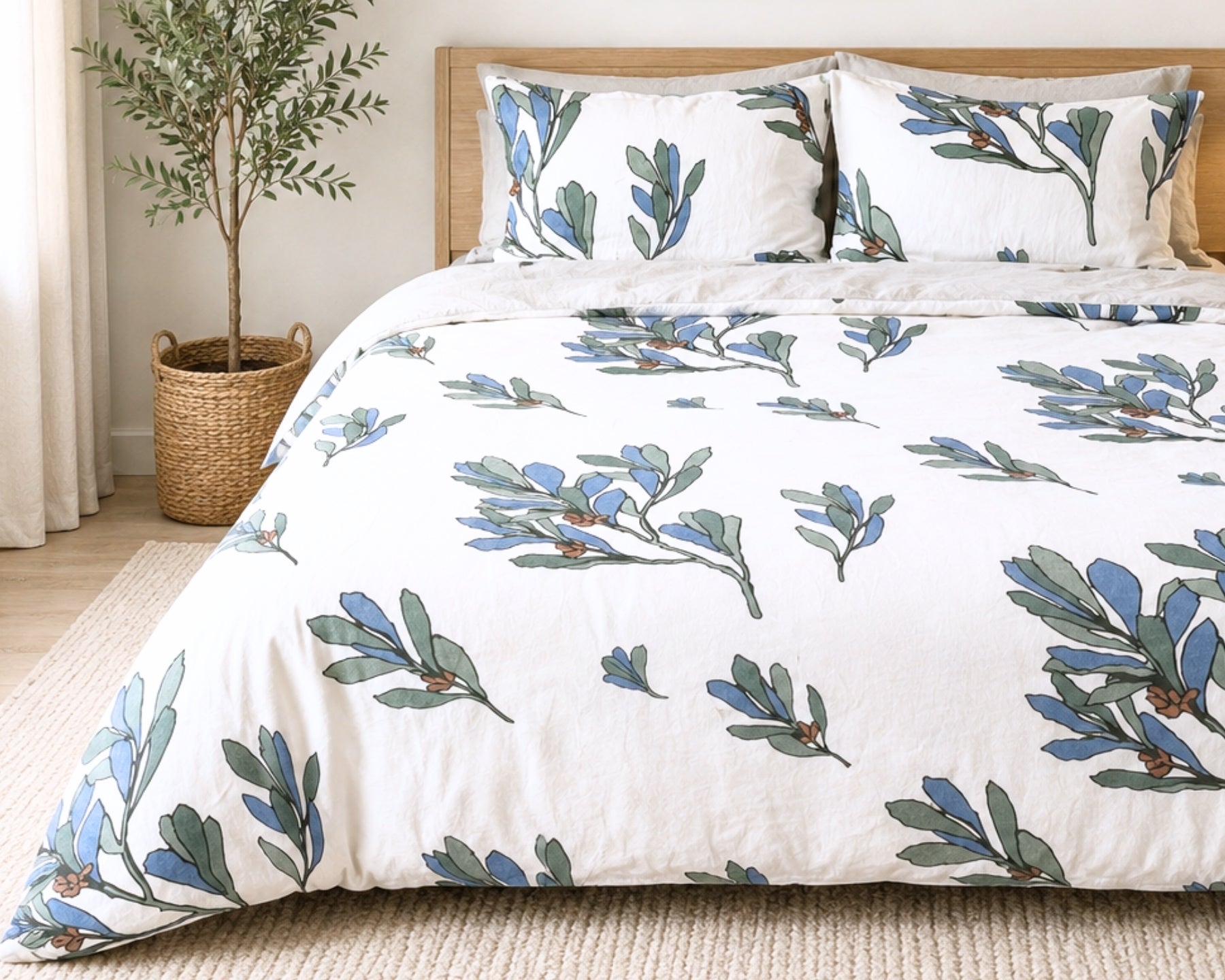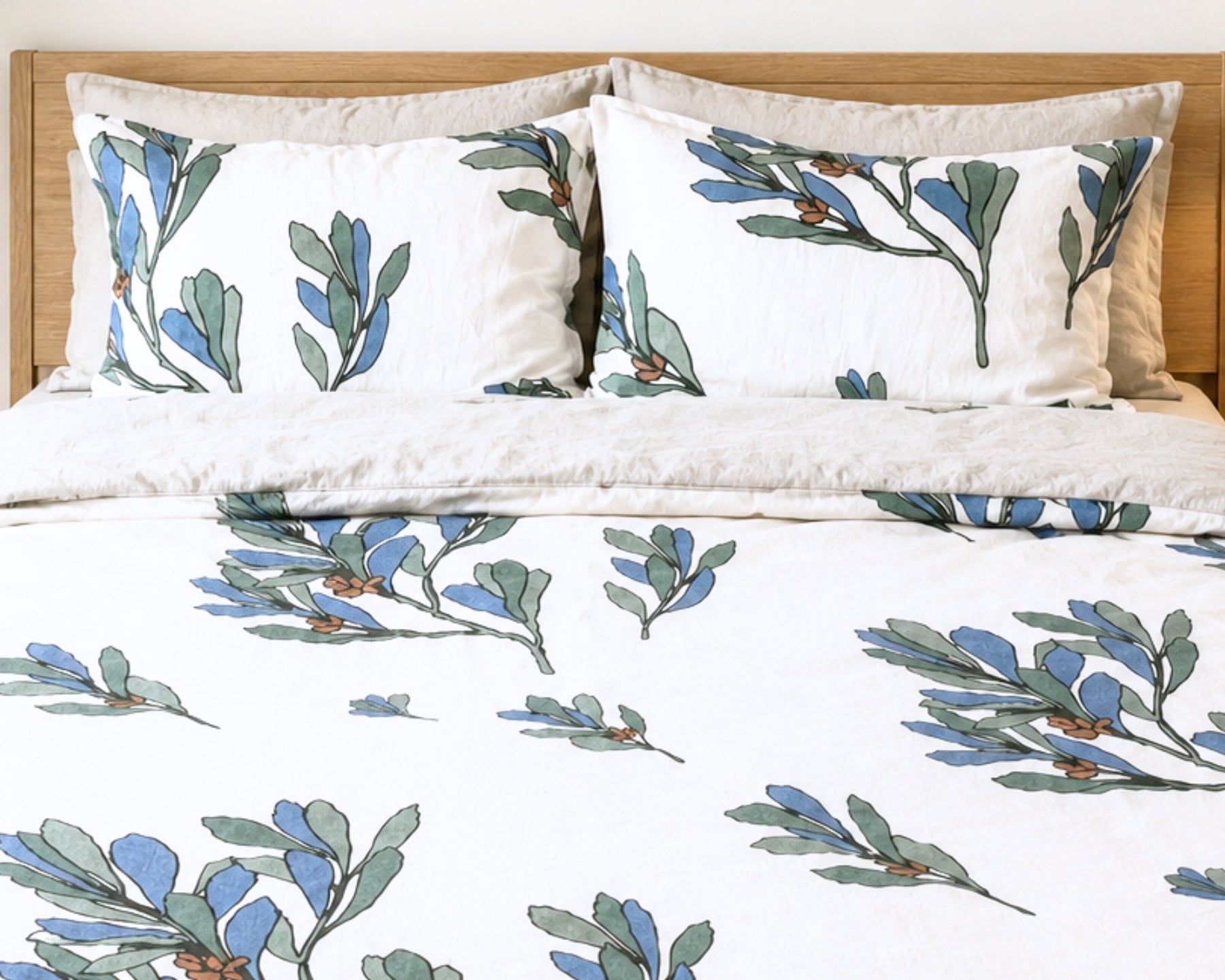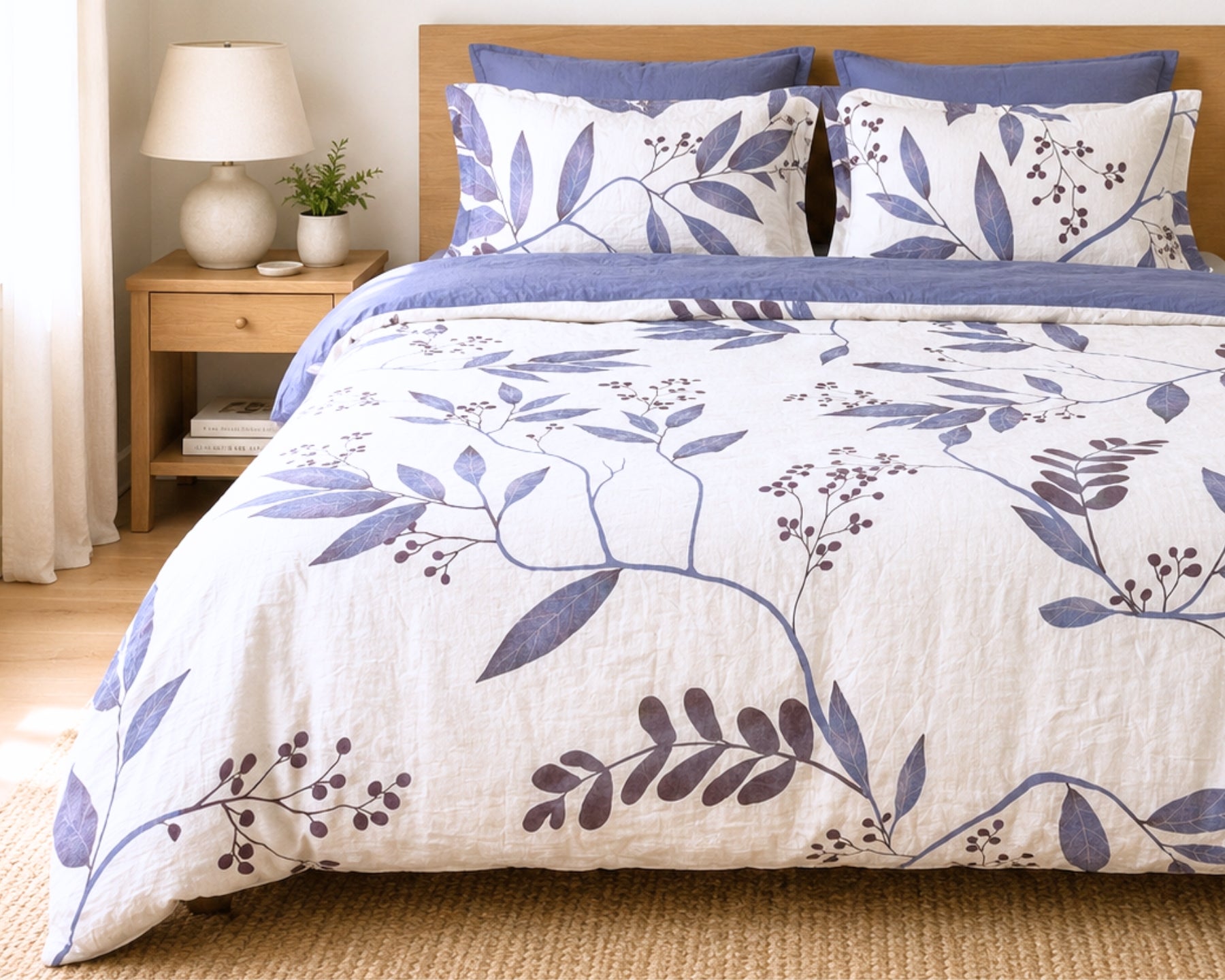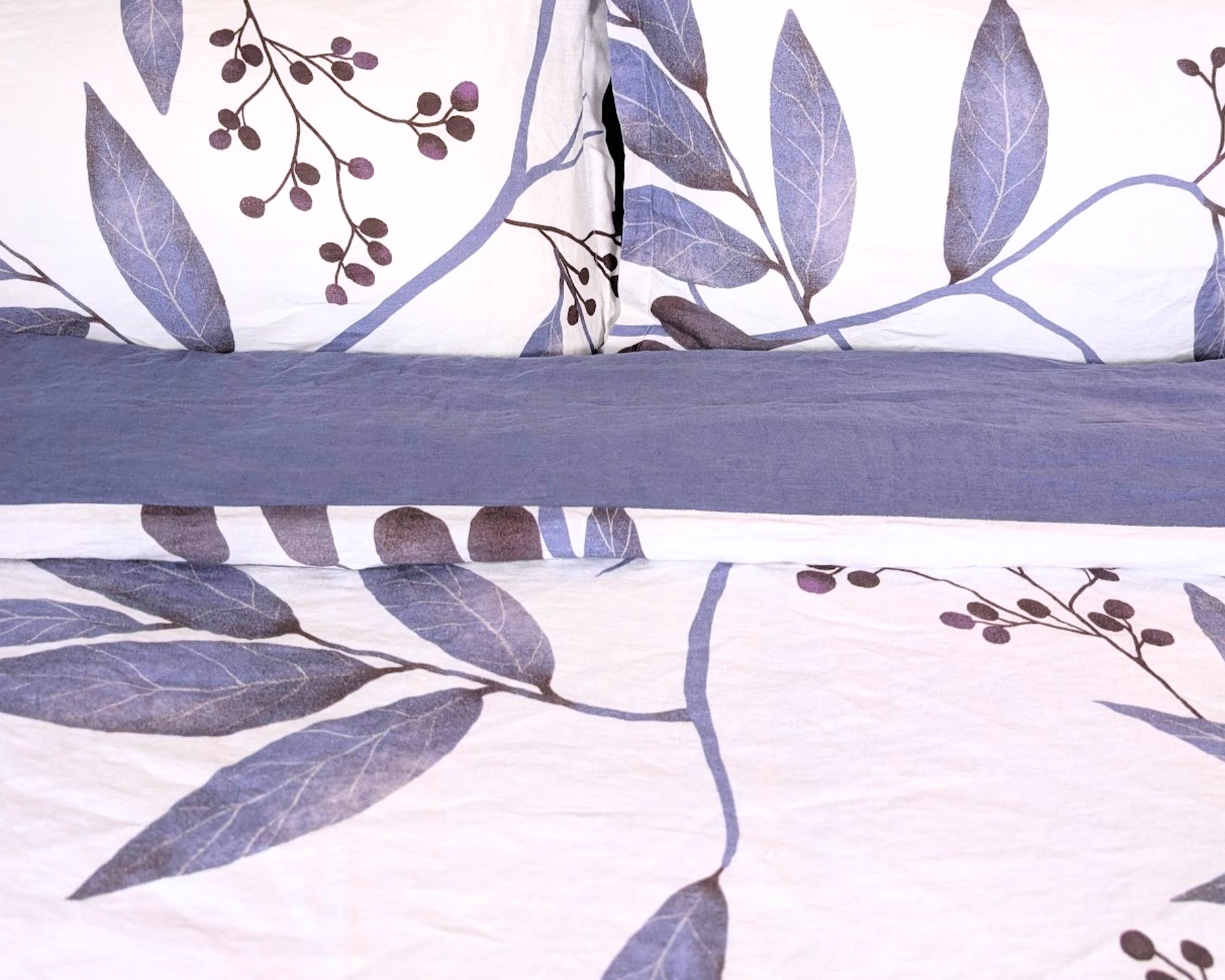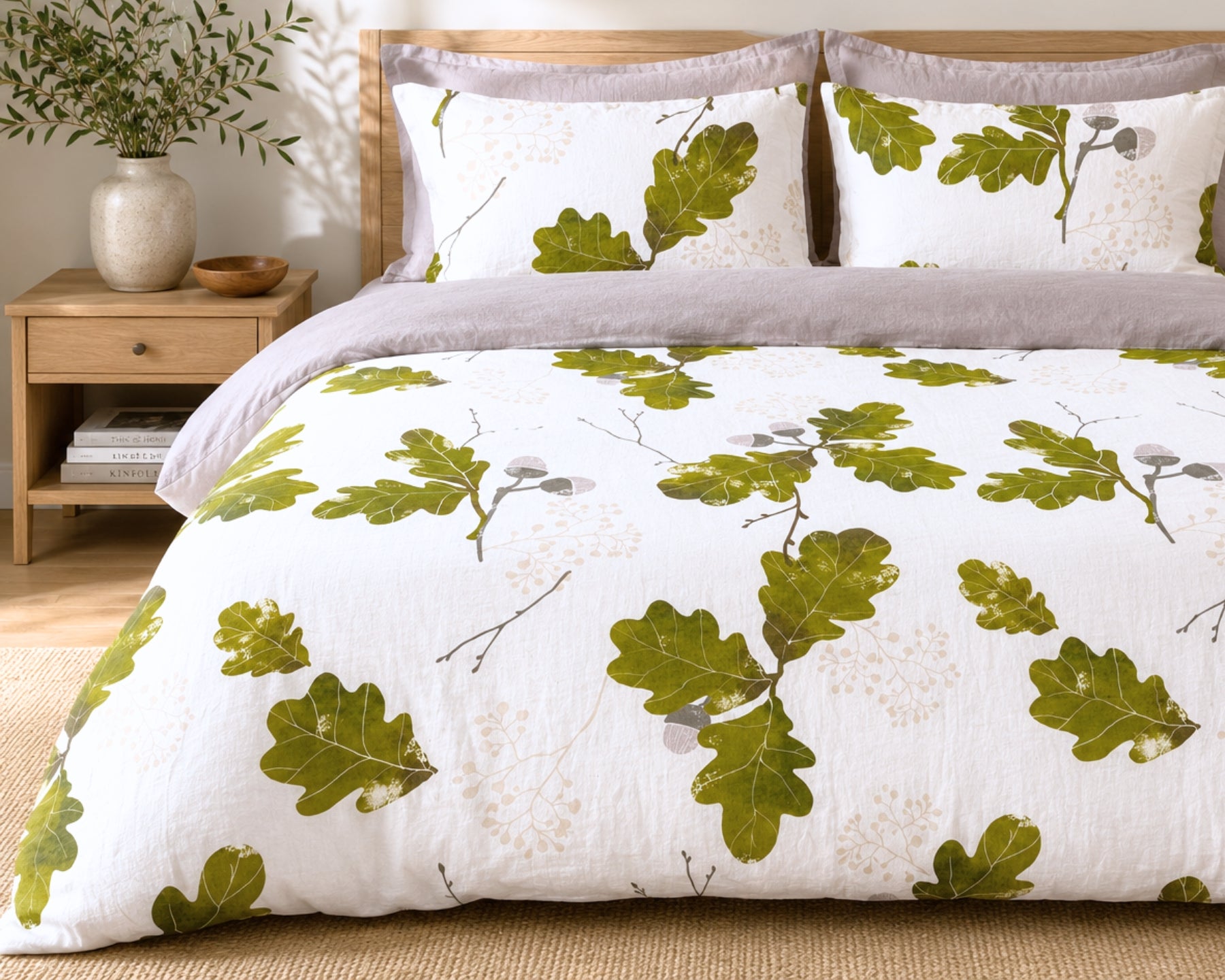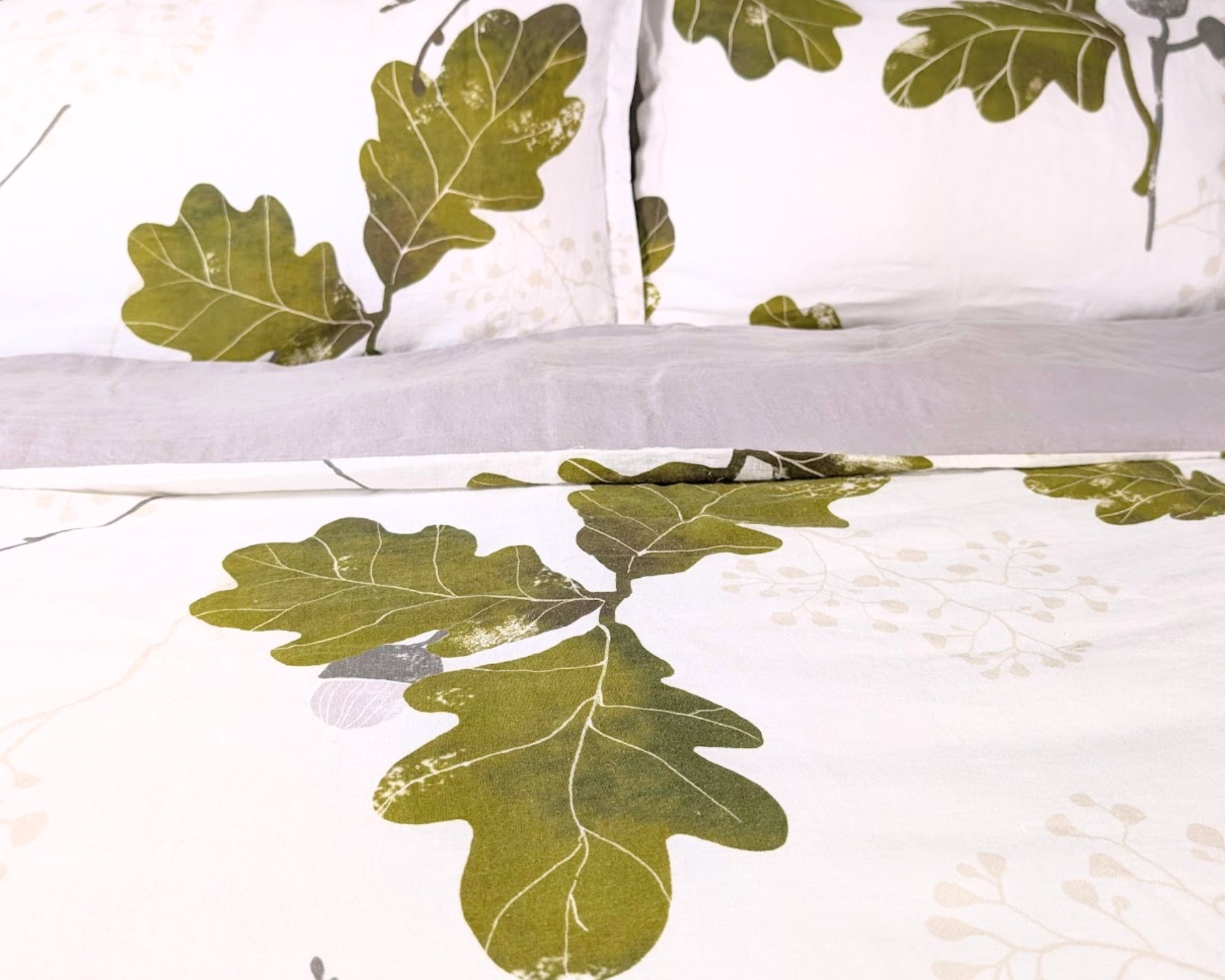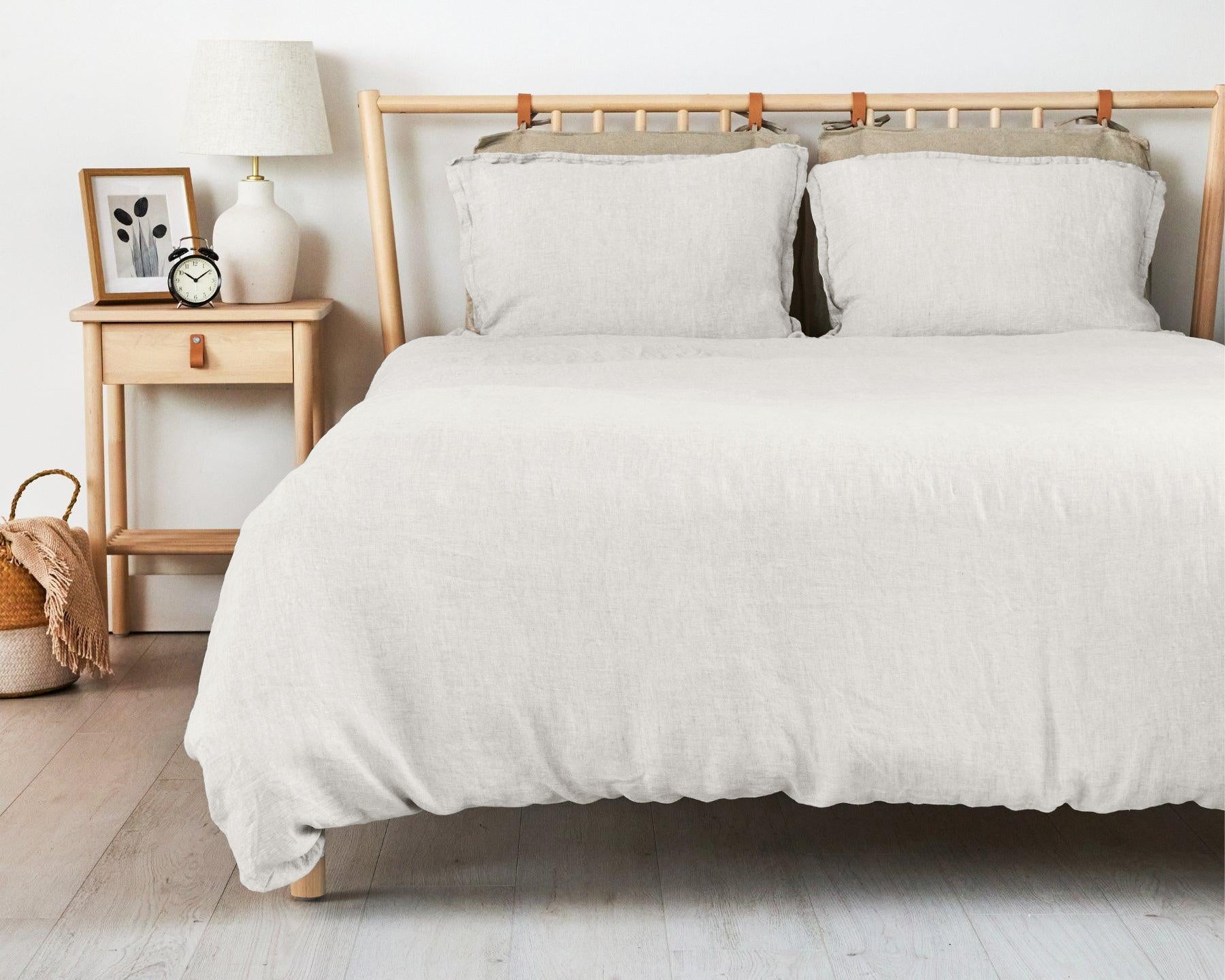


AT THE MODERN DANE, WE DON’T JUST MAKE BEDDING—WE CARRY FORWARD A TRADITION
Rooted in centuries of Scandinavian craftsmanship and deep respect for nature, our bedding is made from sustainable flax grown in Belgium, France, and The Netherlands, and hand-sewn in Portugal by craftsmen.
Every piece reflects the quiet beauty and simplicity of Nordic living—inviting calm into your home through nature-inspired duvets and sheets that are built for years of everyday living.
Why Our Linen Is Different
At The Modern Dane, we focus on making linen well. This page explains the materials, construction, and standards behind our bedding, and how those choices shape its performance and longevity.
We believe good linen should be clearly explained. The quality of a sheet or duvet cover is determined by the fiber it’s made from, the way it’s woven and sewn, and the standards applied at each step of production.
What follows is a clear explanation of those decisions — from where our flax is grown, to why we chose a specific fabric weight, to how and where our bedding is made — so you can understand exactly what you’re sleeping in.
The Short Answer
The Modern Dane bedding is made from 165 GSM European flax linen, grown in France, Belgium, and the Netherlands, woven and sewn in Portugal in facilities that follow established European labor and textile manufacturing practices, and certified OEKO-TEX® Standard 100 Class 1 (the most stringent class for skin-contact textiles). All bedding is garment-washed for immediate comfort and long-term softness.
This construction balances durability, breathability, and a fabric that softens gradually with use.
European Flax: Where Linen Quality Begins
The quality of linen is determined long before fabric is woven or bedding is sewn. It begins with the flax itself.
Our linen is made from European flax grown in France, Belgium, and the Netherlands — regions often referred to as the flax belt, where climate, soil, and generations of agricultural expertise produce longer, stronger fibers. These fibers are naturally more durable and better suited to bedding that is slept on and washed regularly.
We choose traceable flax from regions with a long history of producing premium fiber, allowing for greater consistency and material integrity throughout the life of the fabric.
Why 165 GSM Linen
Fabric weight is one of the most important — and least clearly explained — aspects of linen. GSM (grams per square meter) measures the density of a fabric and provides a meaningful way to compare linen across brands.
Lighter-weight linen can feel soft initially but often loses structure more quickly with repeated washing. Heavier linen, while durable, can feel stiff and limit airflow.
After testing a range of weights, we chose 165 GSM. At this weight, the fabric is substantial without feeling bulky, breathable across seasons, and resilient enough for daily use. It is designed to soften gradually while maintaining its integrity over time.
This linen is designed for long-term use and everyday living, with materials and construction chosen to hold up well and improve with time.
Woven and Sewn in Portugal
Once the fiber is chosen, craftsmanship matters.
Our linen is woven and sewn in Portugal, a country with a long textile tradition and strict labor and environmental standards. Producing in Portugal allows for greater consistency, skilled workmanship, and oversight at every stage of production.
We choose European manufacturing because it aligns with how we think about quality, accountability, and longevity.
Certifications That Actually Matter
Textile certifications can be difficult to interpret, and not all offer the same level of relevance. We focus on standards that directly communicate safety, traceability, and material quality for bedding.
-
OEKO-TEX® Standard 100 Class 1: The highest OEKO-TEX® classification, certifying that our fabric is free from harmful substances and safe for direct skin contact, including for sensitive skin.
- Masters of Flax Fibre™: Ensures the flax used in our linen is grown in Europe and meets strict traceability and quality standards.
We prioritize certifications that clearly communicate material safety and traceability for bedding.
Garment-Washed for Comfort and Longevity
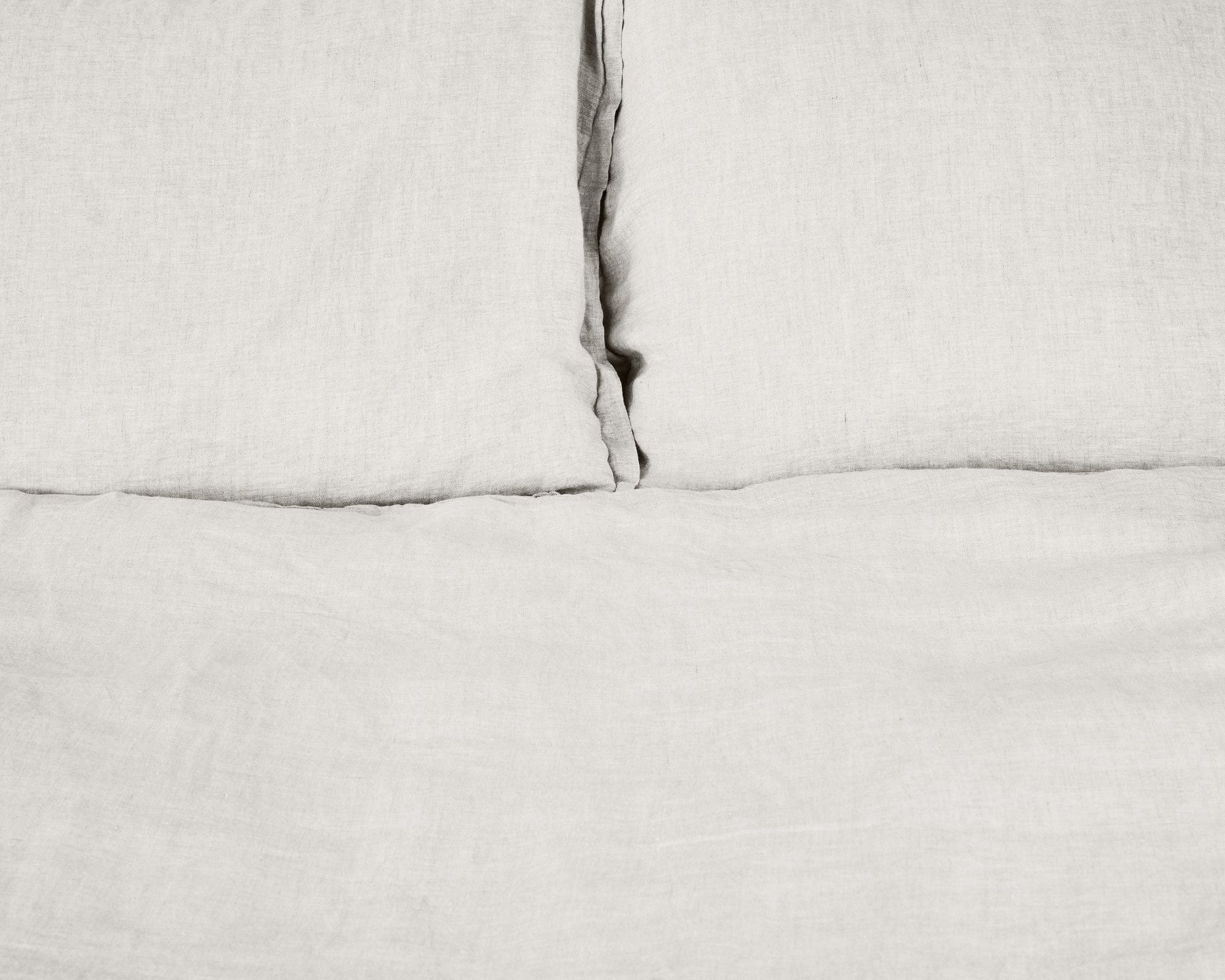
Our linen is garment-washed after it is sewn into finished bedding, rather than washed only as fabric yardage. This process allows the entire piece — including seams, hems, and stitching — to soften evenly and relax into its final form before it ever reaches your home.
Garment washing removes residual stiffness from weaving and sewing, reduces excess lint, and gives the fabric a more natural drape and hand feel. It also helps stabilize the linen, minimizing unexpected changes with subsequent washing.
This process is carried out using detergents and finishing agents that comply with OEKO-TEX® Standard 100 Class 1, the highest OEKO-TEX® classification. Class 1 certification verifies that the finished textile has been tested for harmful substances and is safe for direct skin contact, including for people with sensitive skin.
Importantly, garment washing under OEKO-TEX® standards avoids the use of aggressive chemical softeners that can coat fibers or compromise their strength over time. Instead, softness develops through mechanical action and careful washing, allowing the natural qualities of the flax fibers to remain intact.
As a result, our linen feels comfortable from the first use and continues to become more supple with regular washing and wear, while retaining its structure and durability.
Designed for Long-Term Use
We design our bedding for people who plan to keep it. That means selecting materials that hold up, finishes that age well, and construction that supports years of use. Our focus is on thoughtful materials, careful construction, and long-term ownership.
How This Compares to Most Linen Bedding
Many linen products on the market provide limited information about fabric weight, fiber sourcing, or construction methods, and rely on heavy softening treatments to shape first impressions.
Our approach emphasizes transparency, material quality, and construction choices that support consistent performance over time.
If you’re comparing linen bedding, here are a few things worth asking:
- Is the GSM disclosed?
- Where is the flax grown?
- Where is the fabric woven and sewn?
- Are certifications meaningful and specific?
- Is the linen designed to soften with use, not just feel soft immediately?
Good linen doesn’t hide its construction. It explains it by being transparent about fiber origin, fabric weight, and manufacturing standards.
A Final Thought
We believe the best linen reveals itself gradually. Its quality is found in the materials it’s made from, the care taken in its construction, and the way it performs through regular use and washing.
Every decision outlined on this page — from fiber selection and fabric weight to manufacturing standards and finishing — reflects our intention to make bedding that holds up over time and continues to improve with use.
This page exists to provide clarity around those choices, so you can understand the materials you’re bringing into your home and the standards behind them.
Dive into a world of Scandinavian design and sustainable linen
From the blog
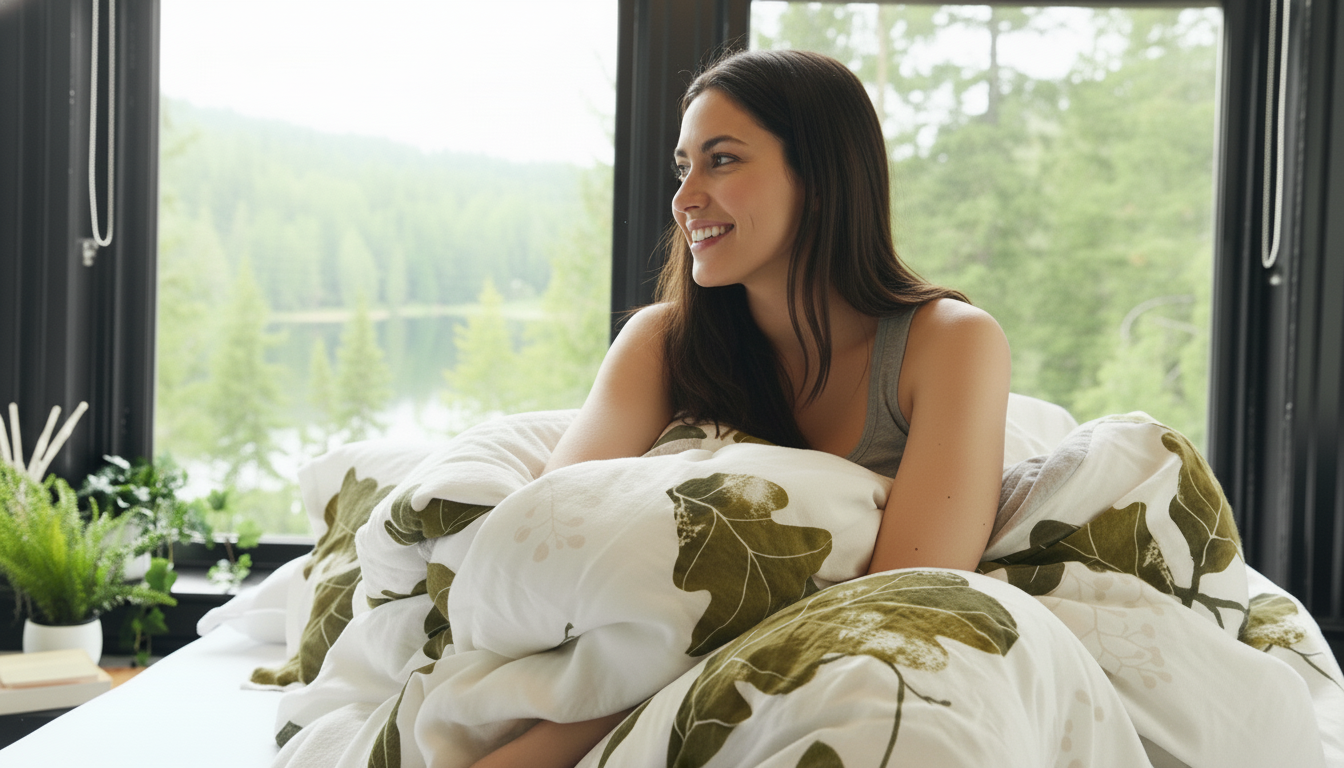
Why Linen Gets Better with Age (And Cotton Doesn’t)
Like a fine wine, linen bedding only gets better with age, becoming softer and more beautiful over time. Discover exactly why it improves with every wash.
Read more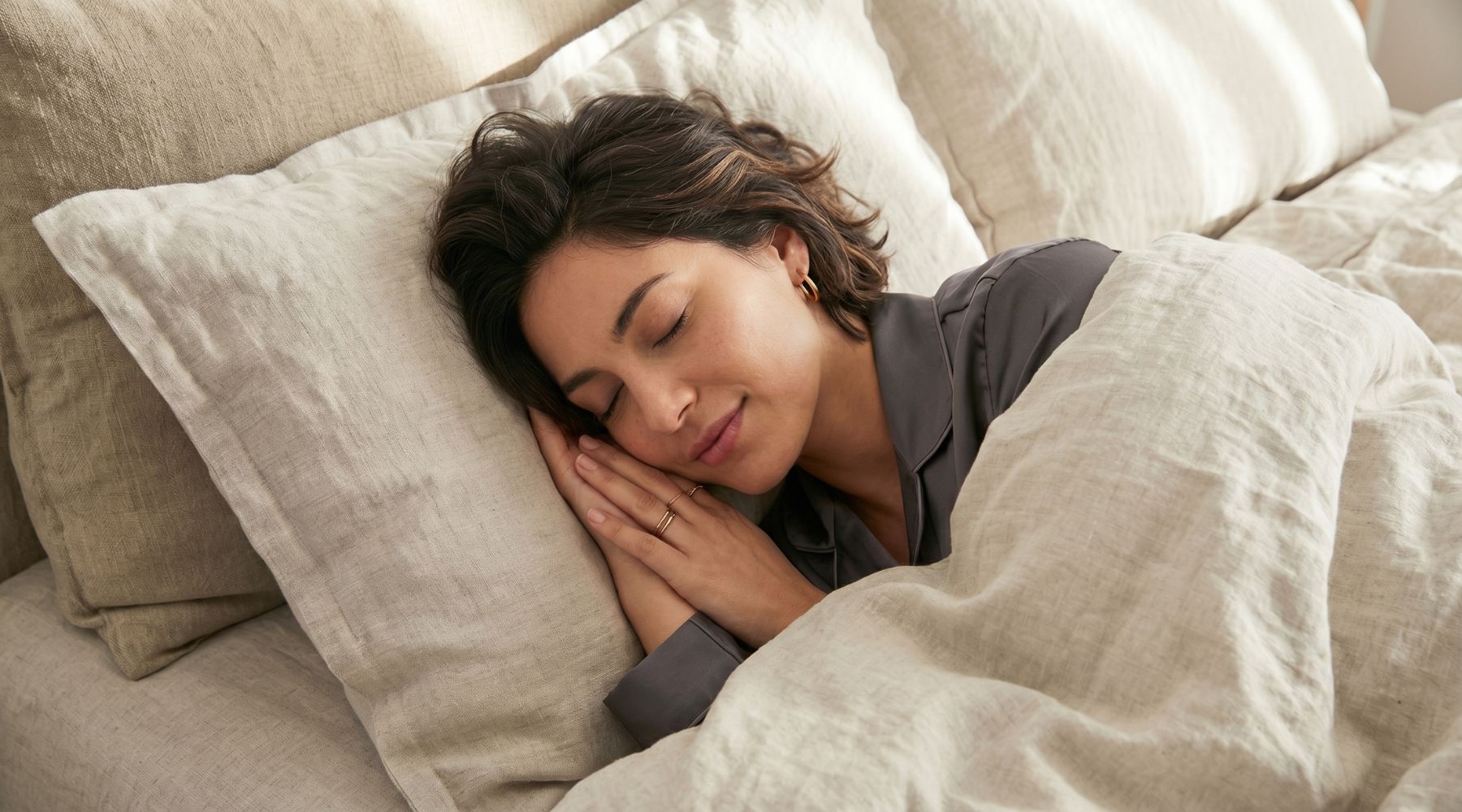
European Linen Bedding: Why Flax Matters for Soft Sheets
All flax is not created equal. Discover why European flax stands apart for softness, strength, and sustainability.
Read more
Why Not All Linen is Created Equal
Although linen is a better choice for bedding than cotton, not all linen is the same. Find out what sets European linen apart.
Read moreArtfully Designed - Carefully Crafted
European Linen Bedding